


Restore
Landscape-Scale Restoration funded by the Nature Restoration Fund in conjunction with the Loch Lomond and Trossachs National Park


The Living Project
Purpose: why this work matters
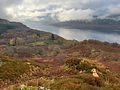
Re-Inversnaid sits within 53 acres of ancient temperate oak rainforest overlooking Loch Lomond. Our nature restoration work is part of a longer journey to restore the health, diversity and resilience of this landscape.
Support from the Nature Restoration Fund has enabled us to move from smaller-scale land management to a coordinated programme of landscape restoration, creating the conditions for nature to recover and thrive.
The work is not about creating a finished landscape. It is about helping natural processes return and learning how to support them over time.
Our Plans
To build on the foundations established through the first phase of restoration, using targeted interventions to help the landscape recover and become more resilient.
The 2026/27 Nature Restoration Fund support is enabling us to continue woodland restoration and invasive species management, create new wetland habitats and strengthen the ecological monitoring that will help us understand how the landscape is changing.

Our Objectives
To restore native habitats, reconnect the landscape and create better conditions for biodiversity to flourish.
We are taking a landscape-scale approach, working with the natural processes already underway and adapting our management as the woodland and wetlands respond.

Restore the woodland
Removing non-native conifers and invasive species, while encouraging native trees and plants to regenerate naturally with some new planting of native species

Reconnect the Landscape
Creating stronger links between areas of native woodland, improving habitat connectivity and supporting wildlife to move through the landscape.

Restore water
Creating and improving wetland habitats to support biodiversity, slow water movement and strengthen the resilience of the wider landscape.

Our Progress
The first stage established the foundations. The next stage builds on what we have learned.
Opening up the woodland

Most of the non-native conifers have now been removed from the native oak woodland, increasing light and creating space for natural regeneration.
There were 13 mature conifer groupings and approximately 90 shelter-belt conifers.
Natural regeneration

The woodland is already responding. Substantial natural regeneration has appeared in cleared areas, with particularly strong oak establishment within the dead hedge terraces.
Tackling invasive species

Removing invasive species is an ongoing part of restoring the woodland. The next stage focuses on the remaining rhododendron and other invasive plants such as Gunnera allowing native vegetation to return and reducing future ecological and wildfire pressures.
Bringing water back

Our first pond and associated silt-filtering ponds have already been rapidly colonised by aquatic species and wetland vegetation. The next stage will create three additional wetland scrapes, increasing habitat diversity and water retention across the site.
Working with people

Restoration is practical, physical work, and people are an important part of the project. During the first NRF phase, 22 volunteers contributed 89 working weeks, gaining skills and experience while helping to restore the landscape.
Measuring change

The first phase established detailed vegetation and topographical baseline data. We are now building on this foundation to monitor habitat condition, natural regeneration, invasive species decline and the development of freshwater habitats over time.
Restoration in progress
A glimpse of the people, practical work and changing landscape at Re-Inversnaid.


The work continues...
The next stage of our Nature Restoration Fund programme builds directly on what we have learned so far.
We will continue restoring native woodland, managing invasive species and creating new wetland habitats, while expanding our monitoring so we can better understand how the landscape responds.
Three new wetland scrapes, further invasive species removal and additional native planting will help strengthen biodiversity, habitat connectivity and climate resilience across the site.

Where we're going....
Restoration at Re-Inversnaid is an ongoing process of observation, action and adaptation.
The landscape is already showing its capacity to recover, and our role is to help create the conditions for that recovery to continue. Alongside the ecological work, we are developing opportunities for people to learn from and contribute to the landscape through volunteering, residential learning and sustainable experiences.
A healthier landscape. More biodiversity. More people connected to the work of restoring it.

Our Testimonials


During my month at Inversnaid I learned so much. We stacked logs, cut rhododendrons, sorted conifer branches, planted bulbs and built dead hedges. The work was definitely physical, but always in a positive way. I really hope to come back to help again and see all the changes in the landscape
Asia
France - November 2025
Jill is a kind and inspiring host who clearly puts a lot of thought and energy into her rewilding project. It felt good to contribute to something meaningful and to learn new practical skills along the way. We are very grateful for the experience.
Anais
France - February 2026
The perfect experience. The work was varied and physical, with picturesque views and sometimes deer in the background. All the tasks felt impactful and, at the end of every day, I had that satisfying feeling: we did something today, today was a good day.
Davies
Latvia - November 2025